














TLDR: Consistency fails because nobody owns the steps before publishing, not because reach is low. Automate four reminders (draft, review, publish, weekly numbers), schedule posts ahead so a missed reminder can't cause a missed post, and look at reach once a week.
If you check reach every morning, you're measuring the wrong end of the process. Reach is the result. Consistency is the input you control, and it breaks at a few predictable moments: nobody writes the draft, nobody approves it, or the post goes out late.
Four reminders cover those moments. Here's the setup.
The four reminders and when each one fires
| Reminder | When | Who | Done means |
|---|---|---|---|
| Draft block | Monday, 60 minutes | Writer | Next week's posts exist as drafts |
| Review nudge | Wednesday, 15 minutes | Approver | Every draft approved or commented |
| Publish check | Daily, 5 minutes | Owner | Today's post is scheduled and live |
| Numbers check | Friday, 20 minutes | Owner | Top and bottom post noted, one change chosen |
Keep them recurring, not one-off. A reminder you have to recreate each week stops existing by week four.
Why a weekly rhythm beats a daily reach check
Daily reach moves for reasons you can't see: platform tests, a slow news day, one post that got shown to a different audience. Reading it every morning pushes you to change plans on noise.
In Mydrop's data, the weekday a post went out made almost no difference to engagement: every day sat within 2% of the account's median. The one clear loser was posting between midnight and 6 am. So the day matters less than showing up on a rhythm and avoiding the dead hours.
Schedule the posts so a missed reminder costs nothing
Reminders prompt people. They shouldn't be the only thing standing between a finished post and your audience. Once a draft is approved, schedule it for its slot and let it publish itself.
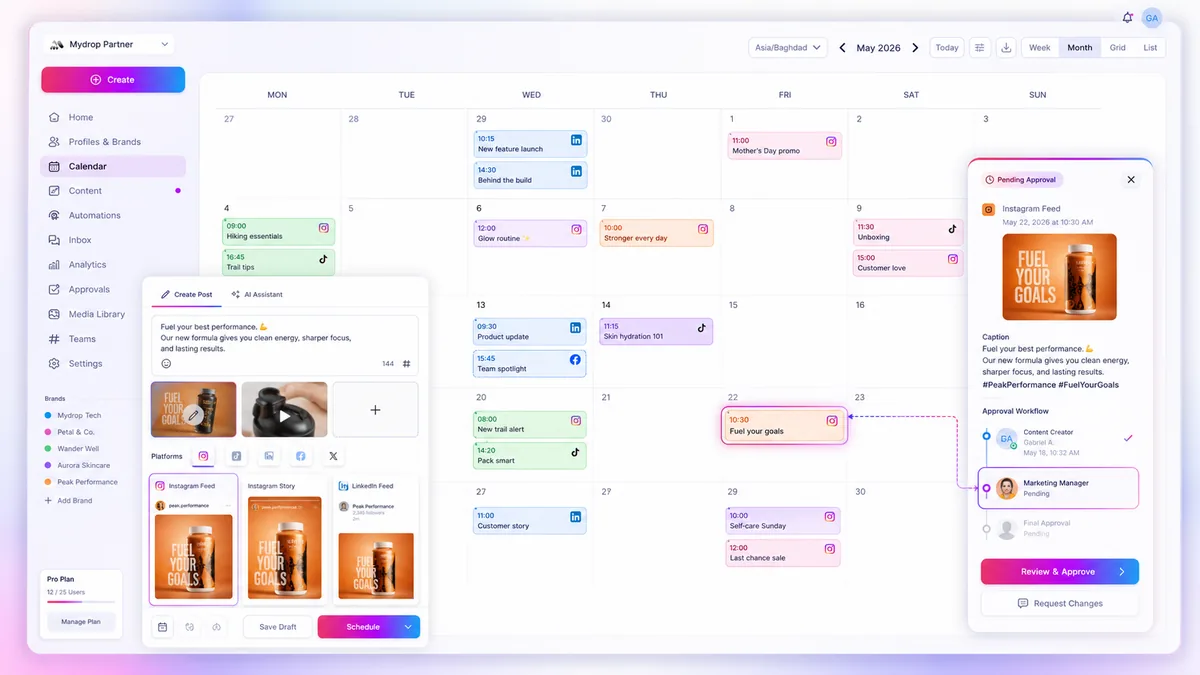
In the Mydrop calendar you can lay out a week across channels, and connect Google Calendar so the draft, review and numbers blocks sit next to your other commitments. The automations handle the repetitive part, so the reminder only asks for a human decision.
Set a cadence you can keep for 12 weeks
Choose the number first, then build reminders around it. If three posts a week is realistic, do three. Raising it to seven in a good month and dropping to zero in a bad one gives you the worst of both.
Mydrop's data on accounts with at least 8 posts shows engagement rates fall as posting frequency rises (0.7% at seven or more posts a week against 3.1% at one to three). That's a correlation, since smaller accounts post less and carry higher rates, but it's a useful reminder that more is not automatically better.
For the longer setup with a calendar tool comparison, see how to schedule consistent social media reminders.
Turn the Friday check into one decision
The numbers reminder should end with a single change, not a report. Note the best and weakest post of the week, write one sentence on why, and change one thing next week: a format, a topic or a time slot.
That keeps the weekly check to 20 minutes and keeps you out of the daily reach loop.
What to do when a reminder keeps getting ignored
If the same reminder is dismissed three weeks running, the problem is the reminder, not the person. Check three things.
- Is the block too long? Shrink the draft block from 90 minutes to 45 and see if it gets done.
- Is the owner unclear? A reminder sent to a team belongs to nobody. Name one person.
- Is the deadline soft? "Sometime this week" never fires. Use a day and an hour.
Fix the cause, keep the reminder. Deleting it is how a posting rhythm quietly dies.
Build your first week of reminders today
Open your calendar and create the four recurring events from the table, with names attached. Then start free in Mydrop, schedule next week's posts, and let the Friday check tell you what to adjust.


 Google review
 Trustpilot review
 Product Hunt comment